
Multimedia Software Pack for Leading Edge Fortiva Computers
During the Fortiva PC era, Leading Edge bundled its computers with collections of software designed to add value for buyers. Like many computer manufacturers in the mid−1990s, the company promoted multimedia software packages that included multiple CD−ROMs containing programs that could be used directly from the discs. The accompanying software was often presented as a significant added value, with manufacturers highlighting the much higher retail cost of purchasing the programs individually. Leading Edge's Multimedia Software bundle included seven CDs covering a variety of applications and entertainment software.
Like many personal computers sold during the mid−1990s, Leading Edge's Fortiva systems were marketed with a substantial collection of bundled software. Manufacturers frequently promoted these packages by highlighting the retail value of the included applications, often claiming savings worth several hundred dollars. Alongside the software preinstalled on the hard drive, the Leading Edge multimedia package included seven compact discs containing a variety of programs that could be launched directly from the CD−ROM, allowing owners to explore games, educational titles, and productivity tools without installing them on the computer.
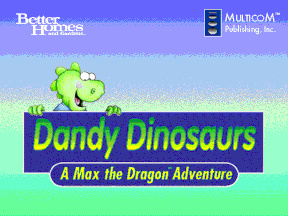
The first disc in the pack was directly branded with Leading Edge, using a font similar to that of the Fortiva computer line logos scattered across the top of the disc. This disc contained several multimedia programs from Multimedia Products Corporation, including "Dandy Dinosaurs," "Multimedia Joke Book," and "Musical Instruments of the Symphony Orchestra."
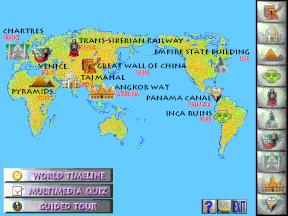
Disc two came from InterOptica Publishing Limited. This disc was a Royal Geographical Society Electronic Guide titled "10 Manmade Wonders." As the title suggested, the disc contained information about man−made wonders from around the world, including locations in Egypt, France, Cambodia, and other countries that users could virtually visit.
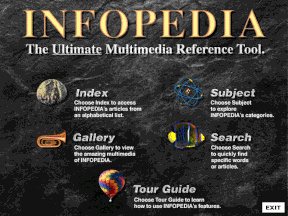
Disc three was a Future Vision Multimedia "Infopedia" disc. "Infopedia" was an encyclopedia on CD−ROM that contained encyclopedic articles and additional multimedia content such as videos, interactive maps, and digital photographs. Multimedia encyclopedias such as "Infopedia" were revolutionary for their time, combining traditional encyclopedia content with forms of media that were not possible in conventional printed reference books.

The fourth disc in the Leading Edge Multimedia Software collection was Multicom Publishing's "Americans in Space." The CD−ROM contained more than 60 minutes of video and hundreds of images covering America's space program. Its content included the race to the Moon, conceptual space stations, early crews, and unfortunate disasters that occurred during this ambitious era of space exploration. The program loaded a futuristic−looking mission control menu screen that allowed users to interactively explore various mission features.
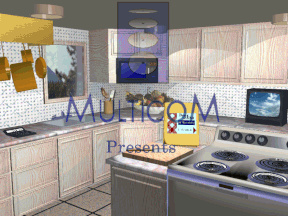
Disc five was Better Homes and Gardens' "Healthy Cooking CD Cookbook." It was a simple program containing a library of healthy−choice cooking recipes. This version could run on both Windows−based PCs and Macintosh computers.
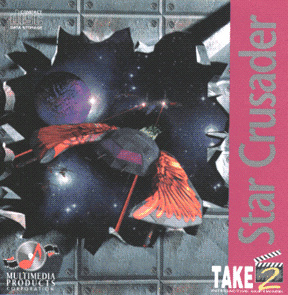
The sixth disc was Take 2's "Star Crusader." This space combat game ran on MS−DOS and tasked players with gaining control over an area of space known as the Ascalon Rift. Players were faced with a choice: side with the Empire as it expanded into the Rift, or join a rebel alliance native to the Rift and resist the Empire's ambitions.
Disc seven, the last known disc in the collection, was Dr. T's Music Software's "Dr. T's Sing−A−Long Kids' Classics CD−ROM." As the name suggested, this CD−ROM was targeted at children and featured a library of curated songs that could be played in three different modes. "Big Kids Mode" kept the program in a window, while "Little Kids Mode" placed the program in full−screen mode to prevent young children from navigating outside the application. The final mode, "Jukebox Mode," allowed the user to create a playlist. Users could also connect a microphone to their PC's sound card and hear their voice during live playback.

Why CD−ROM Images Are Not Available for Download
Although Leading Edge's Multimedia Software package is an important part of documenting and preserving the Fortiva era, the seven CD−ROMs present a different preservation challenge from software produced directly by Leading Edge Products. For many of the older Leading Edge programs preserved on this site, the original publisher was a defunct company and the software was no longer commercially available. In those cases, providing disk or disc images can be an important way of making otherwise difficult−to−obtain historical software available to restorers, researchers, and preservationists.
The Multimedia Software package is considerably more complicated. The seven discs were not simply collections of software produced by Leading Edge. They contained programs, games, educational titles, and other material originating from numerous third−party publishers and developers. While Leading Edge assembled and distributed the package as part of its computer offerings, that did not necessarily mean that Leading Edge owned the copyright to the individual programs contained on the discs.
This created a significant problem when considering whether complete CD−ROM images should be made available for download. Each disc could contain software associated with multiple copyright holders, and determining the current ownership and distribution rights for all of that material would require research far beyond simply identifying the original publisher. Some of the companies involved were no longer in business, while others continued to operate or had been acquired by companies that still existed. Copyright ownership could therefore have passed through mergers, acquisitions, or other transfers over the years.
For that reason, this site does not currently provide downloadable images of the seven Multimedia Software CD−ROMs. This is not intended to diminish their historical or preservation value. Quite the opposite: documenting the discs, identifying their contents, and recording their connection to the Fortiva systems helps preserve information about this software collection without redistributing copyrighted material for which the necessary rights or permissions have not been established.
The discs are therefore presented here primarily as historical artifacts. Their labels, contents, packaging, relationship to the Fortiva computers, and other available information can be documented for researchers and collectors, while the original CD−ROM images remain unavailable for direct download. Should the rights situation for individual titles become sufficiently clear in the future, their availability can be reconsidered on a case−by−case basis.
 LeadingEdge
